Better tires belong in the back. Polygon Most instructors advise what to look out for when changing shoes for winter
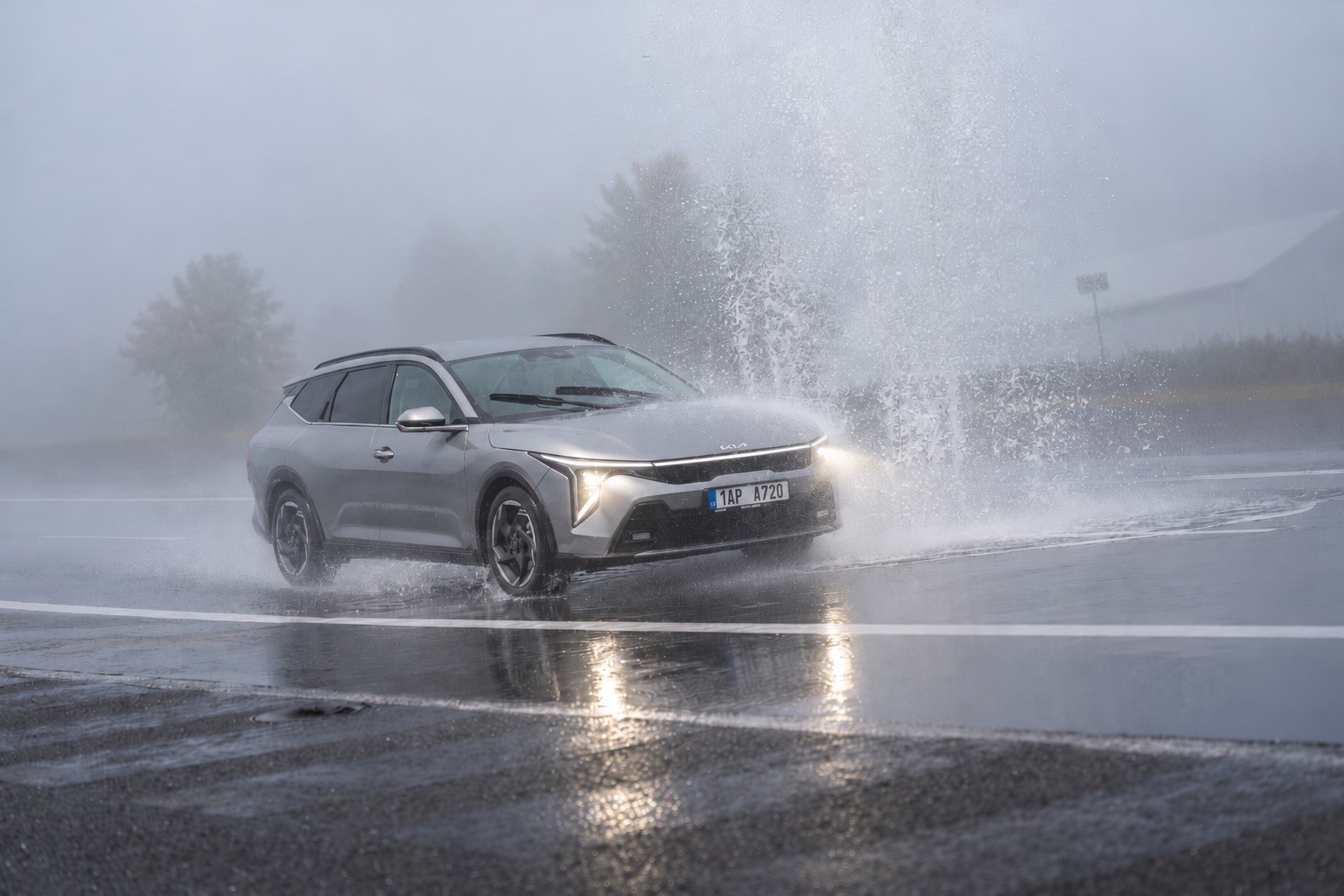
When changing to winter tires, it is important not only to choose the right timing and tread depth, but also to choose the right placement. If drivers have two newer and two more worn winter tires, the better pair should usually be on the rear axle, even in front-wheel drive vehicles. Polygon Most instructors warn that incorrect tire placement can significantly affect the stability of the car, especially on wet roads.
When to switch to winter tires?
A good guideline is a long-term drop in average daily temperatures below 7°C. The law requires the use of winter tires from November 1 to March 31 if there is a continuous layer of snow, ice or frost on the road or such conditions can be expected while driving. For motor vehicles with a maximum permissible weight of up to and including 3.5 tons, winter tires must be on all wheels and have a tread depth of at least 4 mm. Before mounting, it is also advisable to check their overall condition and possible damage.
Why better rear tires?
Many drivers assume that newer tires automatically belong on the drive axle, but if the rear wheels lose traction before the front wheels, the car can go into an oversteer skid that is more difficult to control.
"If we have one pair of new tires and the other is already partially worn, it is a mistake to automatically put the better ones on the drive axle. The different grip has a great impact on the stability of the car, especially on wet roads and when driving through corners," warns Marek Kohoutek, safe driving instructor at Polygon Most.
The general recommendation to place the less worn pair at the rear is also confirmed by tire manufacturers. However, it is always necessary to respect any specific requirements of the vehicle manufacturer.
Even high-quality tires cannot replace the correct driver response.
Experience from safe driving courses at Polygon Most shows that many participants are surprised by emergency braking itself. A common mistake is not pressing the brake pedal quickly and forcefully enough. In vehicles equipped with ABS, it is important to develop maximum braking pressure during emergency braking and maintain it. In addition, the correct position behind the wheel allows for effective control of the brakes and steering.
At Polygon Most, the largest center for safe driving courses in the Czech Republic, drivers can safely try out these situations. On special training surfaces with varying grip, they will learn how their car reacts during emergency braking, evasive maneuvers or skidding, and learn how to react to them correctly.
More information about safe driving courses.
$PHOTOS
Sticker 3D silhouette of a racetrack


