A skid can sometimes be recognized before the car starts to slide. Polygon Most instructors advise what signals to watch for
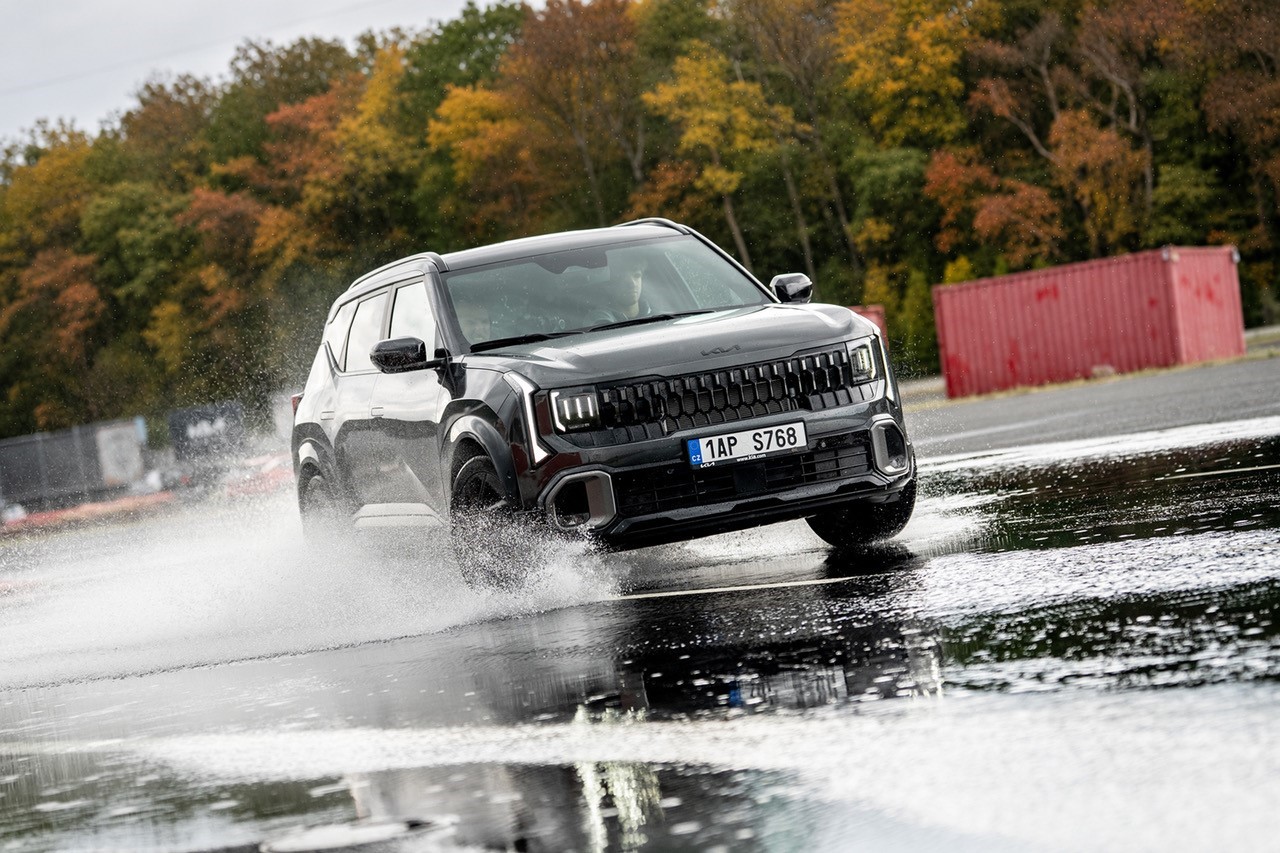
The driver may not notice the loss of grip until the car starts to visibly slide. The first signs can be felt through the steering wheel or seat. The ability to recognize the behavior of the car and react correctly in time is one of the skills that drivers acquire at Polygon Most. This experience is especially useful in the autumn and winter, when wet leaves, ice or other slippery surfaces can unexpectedly change grip.
The car communicates through the steering wheel and seat
When the front wheels lose grip, the driver may feel a change in steering response. The car stops responding to steering wheel turns and continues straighter than the driver intends. A typical mistake is to turn the steering wheel further into the curve. However, this usually does not give the front tires the necessary grip. It is important to brake and avoid further steering wheel movements.
On the other hand, the driver can perceive the beginning of an oversteer, in which the rear axle loses grip, by the movement of the car underneath him. The rear of the car begins to deviate from the intended direction of travel. For a vehicle with an automatic transmission, it is necessary to release the accelerator pedal, for a manual transmission, to depress the clutch and at the same time turn the steering wheel in the direction in which the rear of the car is moving, i.e. to counter-steer. As soon as the car starts to level off, it is important to return the steering wheel appropriately to avoid skidding to the opposite side.
This is why it is important to sit correctly, with your back supported and an appropriate distance from the steering wheel. This allows the driver to better perceive the vehicle's movement and at the same time work more precisely with the steering wheel.
However, these are not foolproof warning signals. On very slippery surfaces, loss of control can occur suddenly and the options for recovery depend on speed, available grip and the specific situation.
Some driving habits will surprise even instructors
The safe driving courses at Polygon Most show that drivers sometimes rely on bad habits or widespread mistakes. For example, one of the participants shook the steering wheel while driving, thinking that this would knock water out of the tread of the front tires. Of course, such a procedure does not work and unnecessary movements of the steering wheel can, on the contrary, worsen the stability of the car due to reduced grip.
In addition, many drivers are caught off guard in an unexpected skid and are unable to react in time. Either they have never experienced a similar situation, or they do not know how to proceed correctly. That is why it makes sense to practice crisis situations in the safe environment of Polygon Most . Instructors can immediately evaluate the driver's reactions, explain what he did right or wrong, and show how to prevent a similar situation or handle it better.
Own car, own experience
It is precisely on recognizing these situations and working with the vehicle correctly that the safe driving courses at Polygon Most focus. On training areas with varying levels of grip, participants can learn the difference between understeer and oversteer skidding, test the reactions of stabilization systems, and gradually improve car control.
The advantage is to complete the training in your own car. Each car has slightly different driving characteristics and control methods. If the driver knows his car well, he can focus on correctly handling crisis situations during training, instead of getting used to an unknown vehicle. By repeating individual exercises, he then learns reactions that he cannot safely practice in normal traffic.
$PHOTOS
Sticker 3D silhouette of a racetrack


